Late 2025: How Lower-Income Consumer Pressure Is Reshaping US Stock Market Leadership
US lower-income consumer spending is under serious pressure. This shift threatens mid-cap and consumer-goods leadership and elevates dividend and defensive sectors as 2025 approaches its final quarter.
Key Takeaways
✔ US households in the lower-income bracket are facing rising healthcare costs, potential loss of food benefits, and job worries — a significant drag on consumer spending.
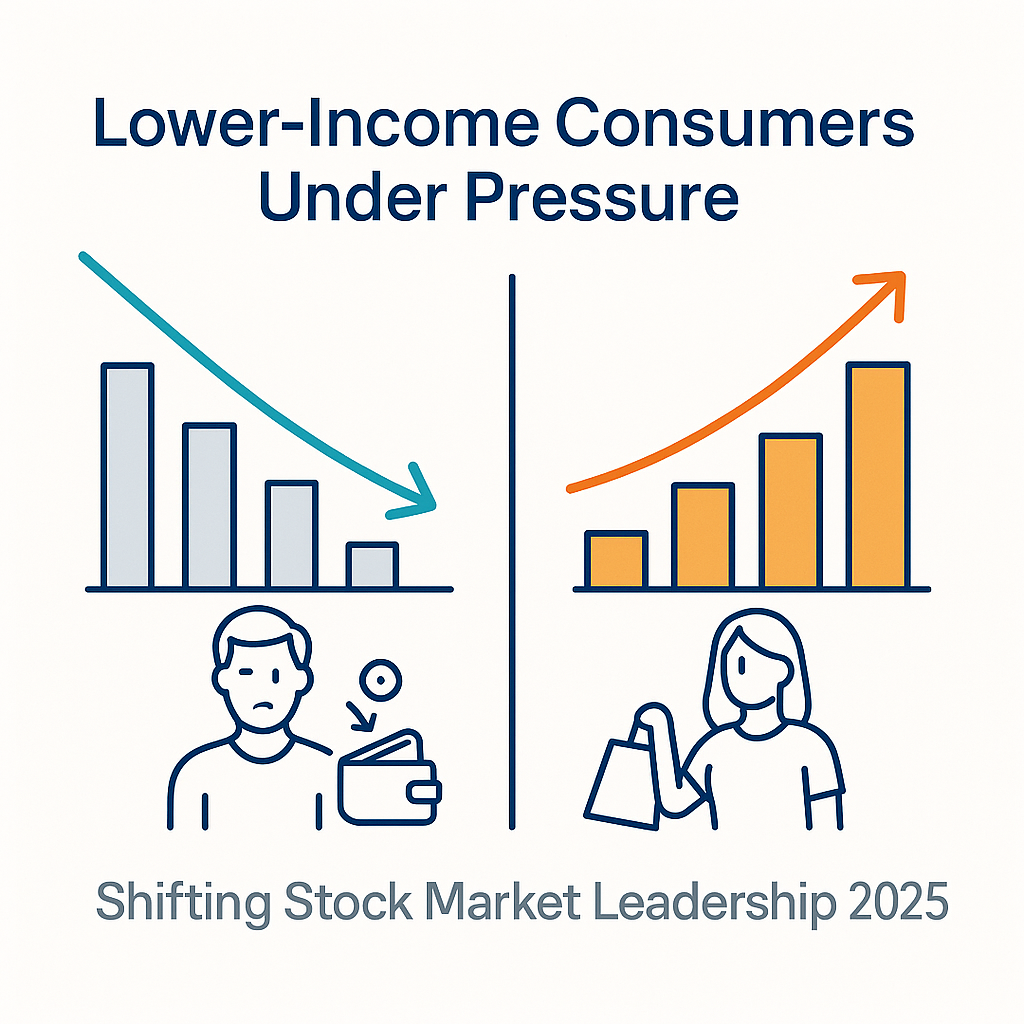
✔ The economy is increasingly displaying a K-shaped pattern: higher-income consumers continue spending while lower-income households pull back.
✔ That divergence is shifting stock-market leadership: consumer-discretionary and mid-cap names tied to low‐income spending face risk, while dividend stocks, essential-consumer goods, and value sectors gain appeal.
✔ Smart investors are now focusing on pricing power, strong cash flow, and defensive exposure as they reassess portfolios for the “lower-income consumer squeeze 2025” theme.
Consumer spending remains a pillar of the US economy. Yet by late 2025, the lower end of the consumer spectrum is showing signs of fatigue. According to Reuters, “lower-income households are being squeezed by higher healthcare costs, loss of food benefits, and corporate layoffs.”
As the holiday shopping season approaches, this matters. A fresh warning suggests GDP growth in Q4 could drop by as much as 1 percentage point if the squeeze deepens.
In this article, we explore how the lower-income consumer pressure is unfolding, why it has implications for US stock market leadership, and what investors focusing on income investing and defensive sectors should consider in the months ahead.
From mid-year to now: The rise of a K-shaped consumer split
Early in 2025, data began to show diverging patterns:
- Higher-income households maintained spending on travel, services, and luxury goods.
- Lower-income households, by contrast, cut back on essentials due to rent, healthcare, utility cost increases and slower wage growth.
On October 24, Reuters reported that companies across sectors were noticing this split. Executives said: “While financially secure consumers are buying larger pack sizes, those living paycheck-to-paycheck are hunting deals.”
This is more than anecdotal—it signals a structural shift in the consumer base. The “K-shaped economy” is gaining traction: one leg up, one leg down. This split means average data may look decent, but the foundation is weaker than it appears.
The data is clear: debt rising, sentiment falling, spending cooling
Key metrics suggest trouble beneath the surface:
|
Metric |
Latest |
Why it matters |
|---|---|---|
|
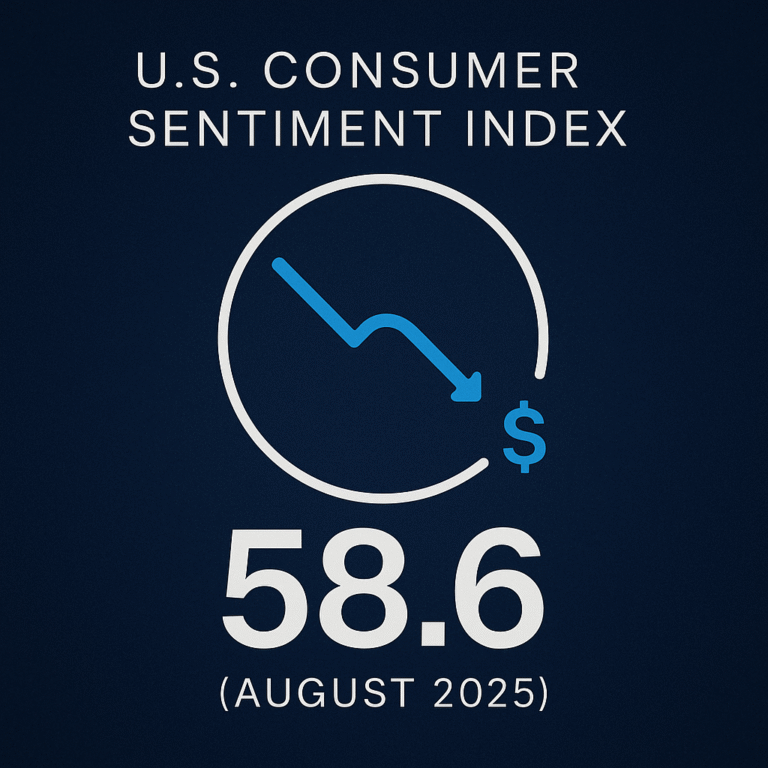
Consumer confidence (University of Michigan) |
Oct 2025: 53.6 (down from 55) |
Indicates lower-income sentiment is weakening; long-run inflation expectations near 3.9 %. |
|
Household debt |
US total ~ $18.39 trillion (Q2 2025) |
High indebtedness limits spending flexibility. |
|
Credit-card delinquency rate |
~ 3.05 % (Q2 2025) |
Delinquencies rising among lower-income borrowers. |
|
Discount retail trends |
Dollar-store traffic up among middle/high incomes |
Indicates low-income demand is already shifting. |
These indicators point to weaker purchasing power among lower-income households, and suggest that consumer spending may lose momentum even if headline figures remain positive.
Retail earnings tell the story: value formats win, premium/volume formats face pressure
Retail companies are already revealing how this plays out.
- Walmart announced maintaining low-price strategy, but issued a conservative guidance update, signaling margin constraints.
- Dollar General revealed an unexpected influx of middle-income shoppers—yet its core low-income customer remains stressed.
It’s a reversal of sorts: discount formats and value brands are gaining share while those dependent on mass-low-income volume or premium upgrades face risk.
For investors, this means not all retail exposure is equal—those with pricing power and value-orientation may come out ahead.
Expert warnings: lower-income weakness could undermine economic growth
Procter & Gamble CFO Andre Schulten commented:
“There is bifurcation in consumer behavior … financially secure consumers buy larger pack sizes, those living paycheck to paycheck seek deals.”
And Fed Chair Jerome Powell observed:
“The question for the Fed is whether the good times at the higher spur of the K remain enough to offset weakness elsewhere.”
In other words: if low-income households continue to cut back, the broader economy may struggle—even if high-income spending stays robust. That’s because this lower tier often drives volume growth, especially in consumer-goods and services sectors.
Sector by sector: Where the pressure is, and where the opportunity lies
Here’s a breakdown of exposure, risk and opportunity in the “lower-income consumer squeeze 2025” environment:
|
Sector |
High Risk |
Opportunity |
|---|---|---|
|
Low-price consumer goods & mid-cap retail |
Volume declines, margin squeeze |
Niche value brands or small-format specialists may succeed |
|
Mid-cap domestic consumer companies |
Higher leverage, less pricing power |
Firms with strong cash flow & less debt stand out |
|
Essential consumer goods & dividend stocks |
Input cost pressures |
Stable demand, strong cash flows → defensive play |
|
Financials (consumer credit exposure) |
Rising delinquencies, higher credit losses |
Repricing risk exists, but disciplined lenders may benefit |
|
Discount / dollar-store formats |
Lower average spending per transaction |
Customer base expanding toward middle income → hit resilience |
The key investment factor across sectors is pricing power. Companies that can pass on cost inflation or attract budget-conscious yet still spending customers will stand out.
What’s next: Key triggers for late 2025–early 2026
Investors should monitor:
- SNAP food-aid program changes: If benefits are reduced, low-income spending could take a sharper hit.
- Federal budget & shutdown risk: Prolonged funding delays may weaken data releases and consumer sentiment.
- Fed policy shifts: A marked slowdown in consumer spending could trigger interest-rate cuts, benefiting high-yield/dividend stocks.
- Retail earnings releases: Discount chains and mass-market value brands’ results will act as early warning signals for “lower-income consumer squeeze” effects.
A proactive monitoring routine includes checking consumer confidence surveys, delinquency stats from Federal Reserve data, and inventory turnover trends in value-format retail.
Actionable investment strategy: Focus on cash-flow and defensive strength
To navigate the shift:
- Rebalance portfolios: Reduce exposure to consumer-discretionary/mid-cap names highly exposed to lower-income spending; increase positions in dividend-yielding, essential-goods, value and defensive sectors.
- Screen for pricing power: Even within sectors, differentiate between firms that can maintain margins vs. those squeezed by volume decline or input cost pressures.
- Monitor consumer-credit risk: Avoid lenders/businesses heavily dependent on high-risk, low-income borrowers unless clarity on underwriting improvements exists.
- Maintain data habits: Regularly review consumer-sentiment indexes, household debt reports, retailer earnings commentary for signs of real-time shifts in low-income spending.
The squeeze on lower-income consumers is more than a social concern—it’s a signal that stock-market leadership may be shifting. As volume-led growth from low-income segments fades, markets appear to reward companies with strong cash-flow, pricing power, and defensive constancy.
References
- “US economy at risk of wobble as lower-income consumers get squeezed” – Reuters, November 3, 2025.
- “US firms grapple with economic divide as lower-income struggles mount” – Reuters, October 24, 2025.
- “Low-Income Households are Falling Further Behind” – Investopedia, August 15, 2025.
- “Low-income Americans slash spending, a worrying sign for the economy” – Washington Post, September 20, 2025.