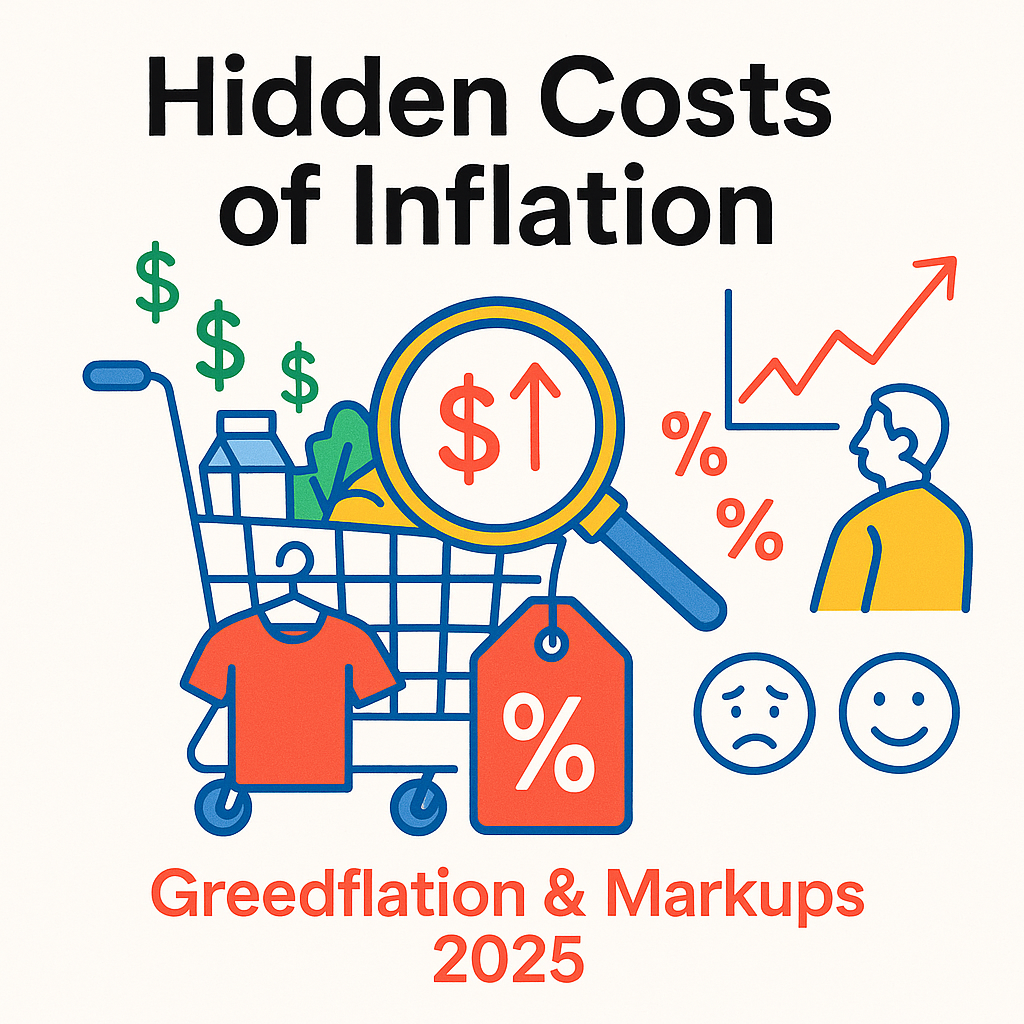
The Hidden Costs of Greedflation in the U.S.: How Corporate Markups Impact Inflation and Investors in 2025
A clear look at greedflation meaning in the U.S., exploring how corporate markups add hidden costs to inflation and what it means for everyday consumers and investors.
Key Takeaways
✔ Greedflation occurs when companies raise prices beyond cost increases, creating hidden costs of inflation for consumers.
✔ U.S. CPI is around 2.7–2.9%, while Core CPI remains above 3%, exceeding the Fed’s target.
✔ Surveys show 58% of Americans notice corporate markups in food, clothing, and healthcare.
✔ For investors, analyzing corporate markups and pricing power is critical to assess profits and risks.
✔ Policy changes and consumer behavior will shape the future of high margins and investment strategies.
Why Greedflation Meaning in the U.S. Matters Now
In 2025, U.S. consumer inflation stands at 2.7–2.9%, while Core CPI holds above 3%. These figures remain higher than the Federal Reserve’s 2% target.
This shows that while inflation has eased from earlier peaks, consumers still feel the hidden costs of inflation in everyday spending. One reason is greedflation, where companies apply extra markups beyond cost increases. This not only affects consumer prices but also changes how investors evaluate corporate profits and high-margin business models.
Greedflation Explained and Why It Emerged After the Pandemic
Greedflation meaning in the U.S. became widely discussed after the pandemic. Supply chains broke down, raw material costs surged, and consumers tolerated price hikes. Companies responded by adding larger markups, raising prices faster than costs.
By 2021–2022, inflation surged and the debate around “corporate greed” gained traction. Even as costs stabilized, prices remained sticky, making greedflation a key explanation for everyday inflation markup examples.
U.S. CPI, PPI, and Data on Corporate Markups Impact on Profits
As of mid-2025, U.S. CPI runs at 2.7% and Core CPI above 3%. PPI data indicates widening margins, suggesting companies are keeping prices high despite lower input costs.
Consumer surveys reinforce this. According to YouGov, 58% of Americans report feeling corporate markups in food and beverages, while many also see hidden costs in clothing, autos, and healthcare.
What Experts Say About Greedflation and Hidden Costs of Inflation
Experts remain divided on greedflation meaning in the U.S. Statestreet notes: “Companies exploiting high inflation to raise prices more than costs has gained attention, but evidence across industries is limited.”
The San Francisco Fed study shows that average markups remained broadly stable, arguing that corporate greed may not be the dominant factor.
This debate highlights that while some sectors show strong markups, broad inflation trends may still be tied to supply-side costs.
Markup vs. Cost: Two Explanations for Consumer Inflation Hidden Costs
|
Factor |
Markup-Driven View (Greedflation) |
Cost & Supply-Side View |
|---|---|---|
|
Price drivers |
Corporate markups expanding profits |
Raw material, shipping, labor costs |
|
Key sectors |
Food, retail, luxury brands, services |
Energy, transport, global trade goods |
|
Timeline |
Sticky prices even after inflation cools |
Sharp cost spikes post-pandemic |
|
Policy response |
Price controls, margin transparency |
Supply chain repair, trade stability |
This comparison shows how interpretations of consumer inflation hidden costs shape policy direction and investment strategies.
Real Impacts of Corporate Markups on Consumers and Investors
Consumers face reduced purchasing power and adapt through brand switching, substitutes, and discount shopping. Everyday inflation markup examples show how even small price increases add up to hidden costs.
For investors, understanding corporate markups impact on profits is critical. Companies with durable pricing power and high margins may thrive, while discretionary or luxury firms could see demand fall. Regulatory risks also loom, as public frustration could drive antitrust or price transparency laws.
Key Factors That Will Shape High Margins and Investment Strategies in 2025
The outlook for inflation and hidden costs depends on:
- Stabilization of input costs like materials, shipping, and wages.
- Federal Reserve policies on rates and inflation expectations.
- Shifts in consumer behavior toward greater price sensitivity.
- Policy risks such as stricter antitrust or pricing rules.
For investors, this means focusing on companies with pricing resilience, while balancing portfolios with inflation-hedging assets like TIPS and real assets. A clear eye on consumer inflation hidden costs will help shape smarter investment strategies.
Greedflation meaning in the U.S. remains debated, but its hidden costs are real for households and investors. Sticky prices, whether from costs or markups, pressure consumers while reshaping corporate profits.
Investors should track inflation trends, corporate markups, and policy risks to adjust portfolios. Building exposure to strong pricing-power firms while adding inflation protection remains a practical strategy in 2025.