Why Fed Rate-Cut Bets in 2025 Are Fueling New Demand for Gold IRAs (Retirement Accounts)
Fed rate-cut expectations and dollar weakness are pushing gold higher. Here’s why Gold IRAs are gaining traction again in retirement planning.
Key Takeaways
✔ Gold is trading near $4,100/oz as markets price in an 80%+ chance of a December 2025 Fed rate cut.
✔ Lower real rates, dollar weakness, and strong central bank gold buying are reinforcing the gold uptrend.
✔ Gold IRAs offer inflation protection, currency hedge benefits, and long-term diversification.
✔ Investors should review IRS rules, eligible physical gold, custodians, and fee structures before starting a Gold IRA.
Gold has staged one of the strongest rallies in the market this year. As of late November 2025, prices hover around $4,100 per ounce, up more than 50% from the start of the year.
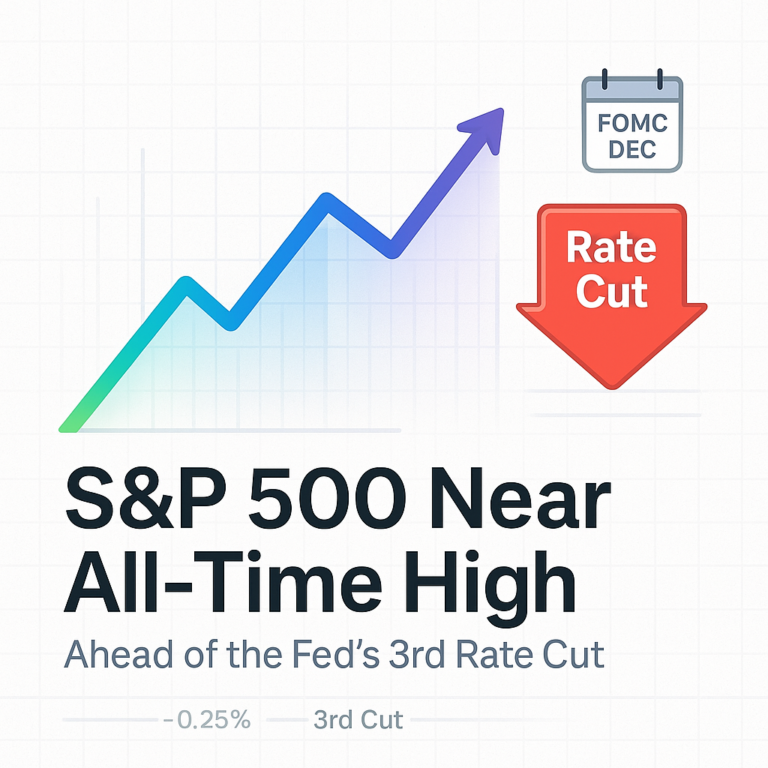
This momentum is closely tied to a shift in Federal Reserve expectations. With U.S. retail sales cooling, labor conditions softening, and inflation moderating, markets now see an 80%+ probability of a December rate cut. Lower rates reduce the opportunity cost of holding non-yielding assets—making gold more attractive.
Against this macro backdrop, something notable is happening: interest in Gold IRAs (gold IRA retirement accounts) is climbing again. As investors rethink how to protect purchasing power during easing cycles, Gold IRAs are emerging as a long-term hedge rather than a short-term trade.
This article explains why the current environment is uniquely favorable for Gold IRAs and how real rates, the U.S. dollar, and central bank buying all work together to reshape gold’s role in retirement planning.
Gold’s Surge and Fed Rate-Cut Expectations in Late 2025
Gold’s breakout above the $4,000 level is not a technical anomaly—it reflects a broad repricing of monetary policy. Futures markets now assign high confidence to a December 2025 Fed rate cut, with many analysts expecting additional easing in 2026.
Slowing retail sales, declining job openings, and softer industrial data are reinforcing this narrative. If the Fed shifts from restrictive to accommodative, real interest rates fall, and gold becomes structurally more attractive.
Major institutions have also raised their long-term forecasts. Several banks now see gold averaging $4,400–$4,900/oz in 2026, underscoring a strong multi-year outlook.
In this environment, long-term investors are increasingly positioning gold not just as a defensive asset but as a core component of a diversified retirement portfolio—especially through Gold IRAs.
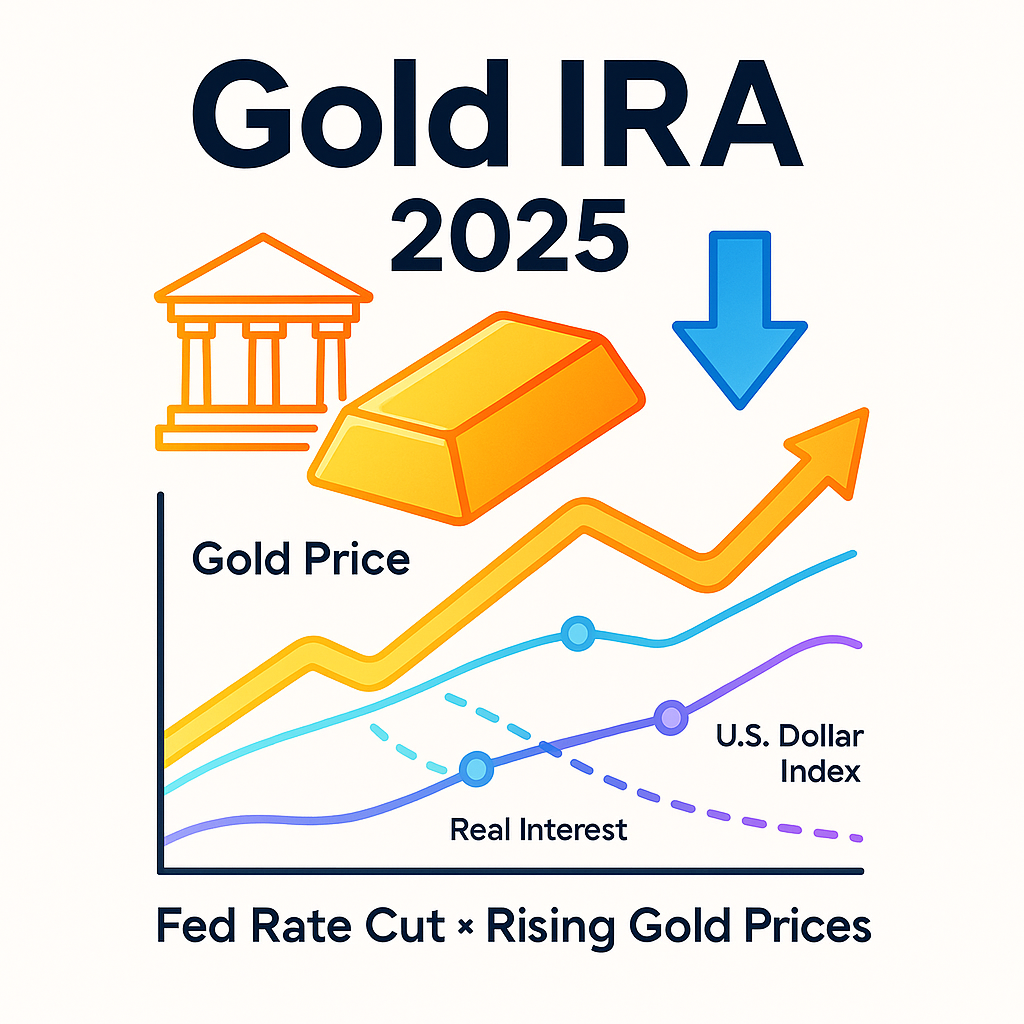
The Three Macro Forces Lifting Gold: Real Rates, Dollar Weakness, Central Bank Buying
Gold’s long-term direction is shaped by more than U.S. interest rates. In 2025, three structural forces overlap to create a powerful uptrend.
Falling Real Interest Rates
Inflation is easing slowly, but nominal rates are expected to fall faster. This pushes down real yields—a critical driver of gold demand. When real rates decline, the cost of holding a non-yielding asset like physical gold drops sharply.
Broad Dollar Weakness
The U.S. Dollar Index has retreated from last year’s highs. A weaker dollar makes gold cheaper for global buyers and supports sustained investment flows.
Strong Central Bank Gold Buying
Central banks purchased more than 220 tons of gold in the third quarter of 2025, adding strategic reserves amid geopolitical tensions. This is not short-term speculative demand—it is structural, long-horizon buying that tightens supply.
Together, these three pillars create an environment where gold is not merely a crisis hedge—it becomes a long-term store of value. That shift explains why the gold IRA retirement account is gaining new relevance.
Why Gold IRAs Are Attracting Renewed Interest
A Gold IRA allows investors to hold physical gold—bars or coins—inside a tax-advantaged retirement account. In periods of monetary easing, Gold IRAs become appealing for several strategic reasons:
1. Protection Against Inflation and Currency Decay
Gold maintains real purchasing power over long periods. This matters for retirees whose biggest risk is not short-term volatility but long-term erosion of spending power.
2. Low Correlation With Stocks and Bonds
Stocks and bonds both wobble during policy transitions. Gold tends to move differently, giving retirement portfolios a stabilizing anchor.
3. Tax Benefits Under IRA Rules
Gold held in a traditional or Roth IRA receives the same tax treatment as other IRA assets. Gains compound tax-deferred (Traditional) or tax-free (Roth), making gold a more efficient long-term inflation hedge.
As investors prepare for a potential multi-year Fed easing cycle, these benefits are gaining relevance—helping explain the renewed growth in gold IRA rollovers and account setups.
Before You Start a Gold IRA: IRS Rules and Costs to Know
Gold IRAs come with specific IRS regulations and fee structures that investors must understand.
Only IRS-approved physical gold qualifies
- Gold must meet the 99.5% purity standard.
- Many collectible coins are not eligible under IRS rules.
Home storage is prohibited
- Physical gold must be held by an approved IRA custodian and stored in an authorized depository.
Additional fees compared to ETFs
- Setup fees
- Annual custodian and storage fees
- Buy/sell spreads
Gold IRAs are therefore best suited for long-term retirement planning, not short-term trading.
Allocation Strategy and Practical Ways to Build a Gold IRA
A strategic approach can maximize the benefits of a gold retirement account.
Recommended Allocation Ranges
- Conservative investors: 5–10% of total retirement assets
- Inflation-focused or risk-averse investors: 10–15%
- Above 20%: rebalancing becomes essential to avoid concentration risk
Use Dollar-Cost Averaging (DCA)
Gold can be volatile in the short term. Adding physical gold to a Gold IRA gradually—over 6 to 12 months—reduces timing risk and creates a smoother entry price.
Combine Gold IRAs With Gold ETFs
- Gold IRA = core long-term holding with tax advantages
- Gold ETFs = flexible tactical exposure
This blended approach offers both tax efficiency and liquidity.
Fed rate-cut expectations, falling real yields, and ongoing central bank gold buying are reshaping the gold market heading into 2026. In this environment, gold is evolving from a defensive trade into a strategic retirement asset.
For investors seeking diversification, inflation protection, and long-term stability, a Gold IRA retirement account can be a compelling addition. If you’re evaluating how to prepare your portfolio for a multi-year easing cycle, now is an ideal time to explore how a Gold IRA fits into your retirement plan.
References
- “Gold climbs near two-week high as rate-cut bets rise” — Reuters, Nov 26, 2025
- “Gold holds steady as Fed rate-cut bets offset dollar strength” — Reuters, Nov 24, 2025
- “Central banks continue large gold purchases in 2025” — Reuters, Nov 17, 2025
- Q1 2025 Central Bank Gold Demand Trends — WGC
- “Gold’s record-breaking rally: who’s keeping it going?” — Reuters, Sep 22, 2025
- “Stocks rise as traders ramp up December Fed cut bets” — Reuters, Nov 24, 2025